

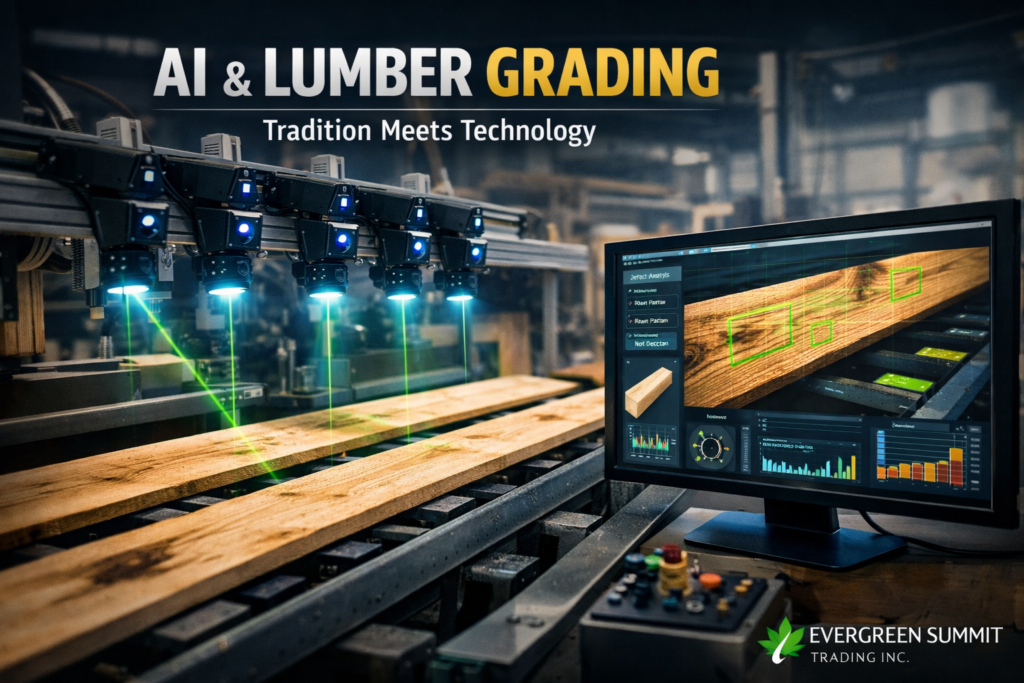
Lumber grading has long been a cornerstone of the wood products industry. Accurate grading ensures that buyers receive materials that meet structural, aesthetic, and performance standards. For decades, trained professionals have relied on standardized rules and visual inspections to evaluate lumber quality.
Organizations such as the National Hardwood Lumber Association (NHLA) play a critical role in establishing and maintaining these grading standards. Their guidelines provide consistency across markets and help ensure fairness and transparency in hardwood transactions worldwide.
As technology continues to evolve, artificial intelligence is starting to play a supportive role in this traditionally manual process. AI-driven imaging systems can analyze large volumes of lumber, detecting patterns, knots, grain variations, and other characteristics that influence grading decisions.
The goal of these technologies is not to replace experienced graders but to enhance the accuracy and efficiency of grading processes. By combining human expertise with machine-assisted analysis, the industry can improve consistency, speed, and training capabilities.
This integration may also help address industry challenges such as labor shortages, increased production volumes, and the need for faster quality verification in global supply chains.
As innovation reshapes the forestry sector, companies involved in lumber trade and export must remain attentive to technological developments that improve quality control and operational transparency.
At Evergreen Summit Trading Inc., we monitor these advancements closely to ensure our partners and clients benefit from the highest possible standards in the global wood market.